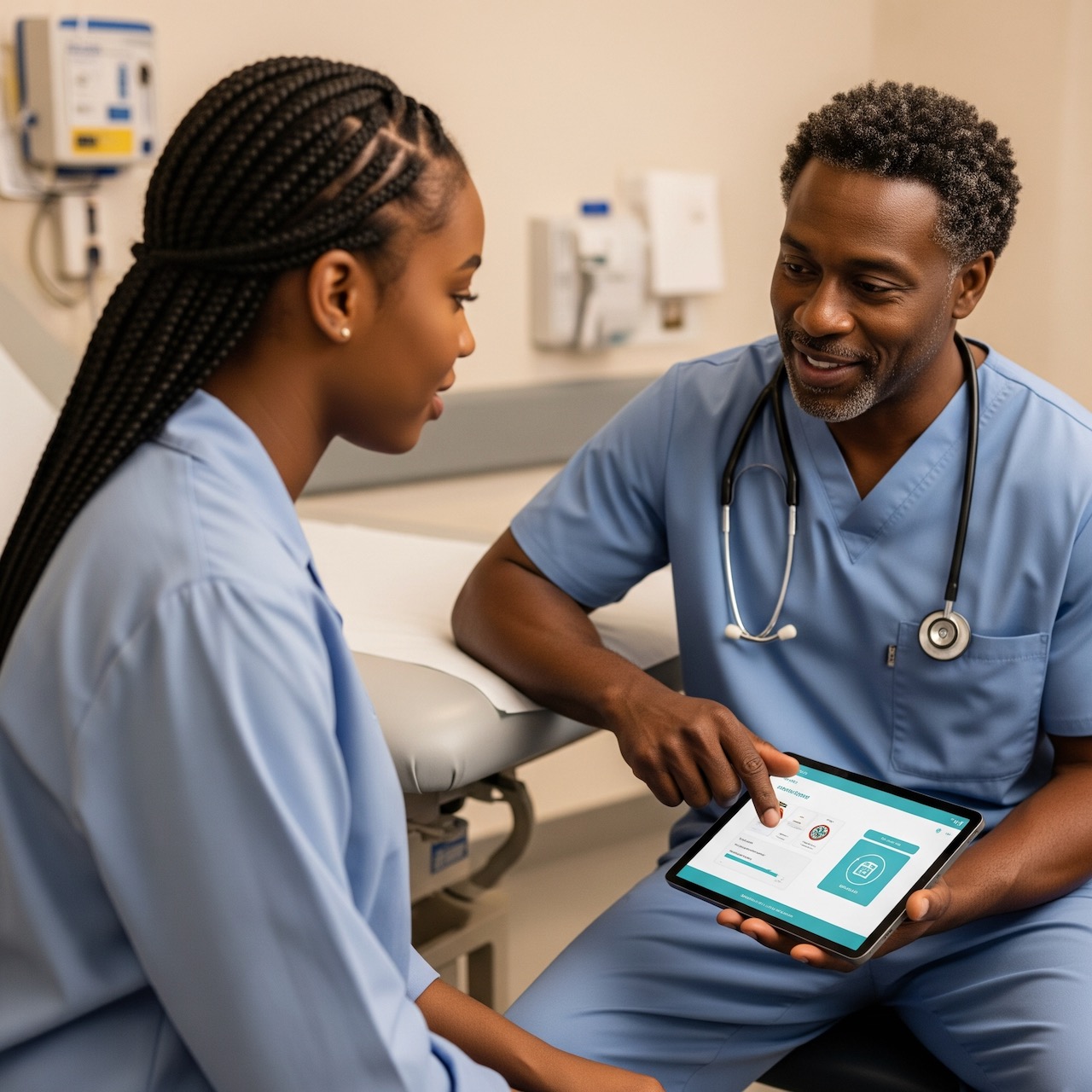
The Transformative Potential of Next-Generation AI in Augmenting Healthcare Services
Podcast: The podcast explores how next-generation AI (Computer Vision, NLP, LLMs) are revolutionizing healthcare by streamlining diagnosis, improving patient communication, and optimizing treatment journeys. Using examples from Google's Healthcare API and Med-Gemini, the paper argues that AI can enhance both efficiency and proactive patient care, leading to more precise, accessible, and empathetic healthcare services.
Executive Summary
The healthcare sector stands at the precipice of a profound transformation, driven by the integration of next-generation Artificial Intelligence (AI) augmented services. This report explores how advanced capabilities such as Computer Vision (CV), Natural Language Processing (NLP), and Large Language Models (LLMs) are revolutionizing critical aspects of healthcare delivery. A primary focus is placed on streamlining the initial doctor-patient diagnosis, enabling proactive and clear patient communication, and optimizing the entire treatment journey from initial assessment to arrival at a health center or hospital. Central to this paradigm shift is the indispensable role of Healthcare Data Engines, which serve as the interoperability backbone, ensuring seamless data flow across complex, meshed healthcare resources for optimal scheduling and coordination.
The discussion incorporates leading examples from Google's contributions, specifically its Cloud Healthcare API and the evolving Med-Gemini models, demonstrating their practical application when integrated with healthcare worker applications, patient-facing mobile apps, patient digital touchpoints, and innovative proactive patient advisory and guidance messaging on arrival at health centres and hospitals (to supplement reception and triage services). Crucially, this analysis maintains a dual imperative: to achieve significant cost and process efficiencies while simultaneously elevating proactive, patient-centric care at every procedural level, through enhanced integration, communication services, and treatment pathways. The synthesis of these technologies promises a future where healthcare is more precise, accessible, and empathetic.
1. Introduction: The Dawn of AI-Augmented Healthcare
The global healthcare industry is grappling with a multifaceted array of persistent challenges, including escalating costs, critical workforce shortages, overwhelming administrative burdens, and an ever-increasing demand for more personalized and accessible care. Traditional healthcare models are frequently hindered by fragmented data, often residing in isolated silos across disparate systems. This fragmentation leads to significant inefficiencies and a disjointed patient experience.
1.1 The Evolving Landscape of Healthcare Challenges
The pervasive issue of data fragmentation within healthcare organizations is a fundamental impediment to progress. This lack of seamless data exchange directly contributes to substantial operational inefficiencies, manifesting as increased administrative workload and reliance on manual tasks.These inefficiencies, in turn, negatively impact the quality and coordination of patient care, leading to delays, errors, and a less satisfactory experience for individuals navigating the healthcare system.
Given that modern AI systems are inherently data-driven, requiring vast amounts of high-quality, structured data to function effectively, addressing these data silos is not merely a technical upgrade; it represents a foundational prerequisite for AI to deliver its full transformative potential.Without robust data interoperability, AI's ability to drive significant cost and process efficiencies, or to enhance proactive patient care, remains severely limited. The relationship is clear: unresolved data fragmentation leads to compounded inefficiency and fragmented care, which then severely restricts the impact of AI. Therefore, the establishment of comprehensive interoperability, primarily facilitated by standardized frameworks like HL7 and FHIR, emerges as the crucial enabler for widespread and impactful AI adoption, rather than being a parallel or secondary development.
1.2 Defining Next-Generation AI Augmented Services in Healthcare
Next-generation AI in healthcare extends far beyond basic automation, leveraging sophisticated algorithms to learn intricate patterns, generate accurate predictions, and derive actionable insights from vast, complex datasets.The objective is to create healthcare solutions that are more personalized, accessible, and effective, with a particular emphasis on addressing the needs of resource-challenged communities where healthcare worker shortages are prevalent.The overarching goal is to augment human capabilities, thereby easing clinical workloads, significantly elevating the patient experience, and ultimately improving overall health outcomes.
Initial applications of AI often focus on automating repetitive, high-volume tasks, which certainly contributes to efficiency. However, the strategic direction for AI in healthcare is shifting towards "AI augmented services." This signifies an evolution from simply replacing human tasks with machines to enhancing human decision-making, cognitive abilities, and overall capabilities. For instance, in diagnostics, AI systems are designed to assist radiologists by identifying subtle anomalies and improving accuracy, rather than fully replacing their expertise.The implication is that successful and ethical AI deployment in healthcare necessitates a collaborative human-AI model. In this model, AI functions as an intelligent assistant, providing critical insights and streamlining workflows, thereby enabling healthcare professionals to dedicate more of their time and expertise to complex decision-making, empathetic patient interaction, and the nuances of care that only human clinicians can provide. This approach also proactively addresses ethical considerations related to potential job displacement and reinforces the critical need for continuous human oversight in clinical settings.
2. AI in Initial Diagnosis: Streamlining the Doctor-Patient Encounter
The initial phase of patient interaction and diagnosis is critical for setting the trajectory of the entire healthcare journey. Next-generation AI, particularly Computer Vision, Natural Language Processing, and Large Language Models, is poised to profoundly transform this phase, making it more efficient, accurate, and patient-centric.
2.1 Computer Vision: Enhancing Medical Imaging and Early Detection
Computer Vision (CV) algorithms are emerging as exceptionally powerful diagnostic tools, demonstrating remarkable proficiency in pattern recognition. These systems excel at detecting subtle anomalies in medical images that are frequently overlooked by the human eye. Their applications span a wide array of imaging modalities, including X-rays, Magnetic Resonance Imaging (MRIs), Computed Tomography (CT) scans, and ultrasounds.
The deployment of CV significantly enhances diagnostic accuracy and operational efficiency. For example, AI-powered systems designed to analyze mammograms have been shown to surpass human radiologists in performance, leading to a notable reduction in both false positives and false negatives, while simultaneously decreasing radiologist workload by up to 88%. Specific clinical use cases abound, including the detection of subtle fractures, identification of small lung nodules, localization of brain abnormalities, and the diagnosis of diabetic retinopathy. In the field of dermatology, CV systems analyze dermoscopic images to identify skin cancers such as melanoma with accuracy comparable to that of dermatologists, even for lesions located in challenging areas. The integration of multimodal classifiers, which combine image data with patient metadata, further refines diagnostic performance, achieving an Area Under the Curve (AUC) of 0.866 versus 0.784 for binary melanoma detection.
Beyond imaging, CV also plays a crucial role in automated pathology analysis, where it reviews biopsy samples and blood tests to identify microscopic abnormalities. This capability accelerates review times and boosts laboratory efficiency. A notable example is the CHIEF model, which achieved an impressive 94% accuracy in cancer detection across 11 different cancer types by analyzing 15 million unlabeled images and refining its capabilities with 60,000 whole-slide images.
The consistent evidence suggests that Computer Vision not only improves diagnostic accuracy but also significantly increases speed. This enhanced capability directly facilitates earlier disease detection, which is a critical factor in improving patient outcomes. This earlier detection, in turn, is explicitly linked to enabling faster intervention and the prompt initiation of treatment. This creates a powerful positive feedback loop: a faster and more accurate diagnosis upstream directly translates to improved patient outcomes downstream, potentially boosting survival rates for serious conditions and alleviating patient anxiety. This implies that strategic investments in diagnostic AI yield far-reaching benefits that extend beyond the initial point of care, positively influencing the entire treatment journey and contributing to overall public health.
2.2 Natural Language Processing and Large Language Models: Revolutionizing Symptom Analysis and Differential Diagnosis
Natural Language Processing (NLP) empowers computers to comprehend and utilize human language effectively, extracting meaningful information from vast amounts of unstructured data such as physician notes, laboratory reports, and patient conversations.
NLP-powered symptom checkers are particularly adept at mapping patients' natural language, including non-medical terms and slang, to precise clinical concepts. These systems guide patients through personalized and accurate recommendations for subsequent steps, whether it's scheduling an appointment or connecting with a triage nurse. For instance, Keona Health's CareDesk effectively ties patient utterances to clinical concepts, demonstrating its capability across over 5 million parsed search strings and 1 million processed encounters.
Large Language Models (LLMs) have demonstrated remarkable capabilities in disease diagnosis. This includes their effectiveness in identifying rarer diseases by integrating LLM knowledge with expert systems, as exemplified by RareScale.This advancement directly addresses the often-prolonged diagnostic odyssey faced by patients with rare conditions, which can average four to five years and frequently involve multiple misdiagnoses.
LLMs have also been shown to significantly enhance clinicians' diagnostic performance, particularly in complex critical illness cases. A study involving DeepSeek-R1, a reasoning model, revealed that AI assistance improved physician diagnostic accuracy from 27% to 58% and substantially decreased diagnostic time.Furthermore, LLMs have proven capable of passing standardized medical examinations, such as the United States Medical Licensing Examination (USMLE).
Beyond diagnosis, LLMs are instrumental in generating high-quality, empathetic, and easily understandable responses to patient questions. They can also summarize dense medical information, thereby reducing the significant documentation burden and cognitive load on clinicians.
A significant challenge in the initial diagnostic process is the inherent mismatch between how patients describe their symptoms, often using free-text and non-clinical language, and the structured, precise terminology required for medical checklists and clinical documentation. NLP and LLMs directly address this fundamental issue by excelling at processing unstructured text and translating it into structured clinical concepts. These systems can even adapt to regional differences and slang, ensuring broad applicability. By improving the intake, interpretation, and structuring of patient-reported symptoms, AI can significantly streamline the initial diagnosis process for medical professionals, making it faster, more accurate, and reducing the burden of manual interpretation and data entry.This gain in efficiency at the very beginning of the patient journey sets a positive and productive tone for the entire continuum of care.
2.3 Real-world Applications and Examples
The practical application of AI in initial diagnosis is already evident in various real-world scenarios. Google Lens, for instance, offers a capability to visually search for skin conditions by analyzing a snapped photo, presenting visually similar matches to guide the diagnostic process.
Google has also developed an AI system specifically designed to interpret chest X-ray scans for early signs of Tuberculosis (TB). In a strategic partnership with Northwestern Medicine, Google has integrated an AI system into breast cancer screening workflows, assisting radiologists in identifying cancer earlier and with greater consistency.
A significant advancement in this domain is Med-Gemini, the successor to Google's MedLM. Med-Gemini represents a new family of next-generation models specifically fine-tuned for the medical domain.It builds upon Google's broader Gemini models, inheriting their native reasoning, multimodal, and long-context abilities, and is further refined through fine-tuning on de-identified medical data. MedLM is deprecated and will no longer be available on or after September 29, 2025.
Med-Gemini enhances clinical reasoning through sophisticated techniques such as self-training and web search integration, and it significantly improves multimodal performance for applications across radiology, pathology, dermatology, ophthalmology, and genomics. It has already demonstrated superior performance, achieving a new state-of-the-art score on the MedQA (USMLE-style) benchmark, significantly surpassing its predecessor, Med-PaLM 2.
Historically, medical diagnostics have often relied on isolated data types—for example, an image for radiology or text for patient history. The emergence of Med-Gemini, with its explicit emphasis on "multimodal capabilities," coupled with Computer Vision's success with multimodal classifiers and NLP's ability to process unstructured text, signals a profound shift. This indicates a future where AI seamlessly integrates diverse data sources—including images, text, and genomic data—to facilitate a more holistic, comprehensive, and accurate diagnostic process. This moves beyond isolated AI applications to a truly integrated diagnostic approach, enabling what is often referred to as "precision diagnostics".In this advanced scenario, AI synthesizes all available patient data to construct a richer, more nuanced diagnostic picture, unlocking deeper insights than any single data type could provide in isolation.
3. Optimizing the Patient Journey: Proactive Communication and Seamless Treatment
Beyond initial diagnosis, AI is profoundly impacting the patient's entire journey, from proactive communication to seamless treatment coordination, ensuring a more engaged and informed experience.
3.1 AI-Powered Proactive Patient Communication
Artificial Intelligence is fundamentally transforming the patient experience by enabling timely, meaningful, and highly personalized interactions, shifting the paradigm from traditional reactive communication to a proactive approach.
Predictive analytics, a powerful application of AI, can forecast patient outcomes and identify potential health risks well in advance, allowing for targeted and proactive interventions. For instance, AI systems can accurately predict which patients are at a higher risk of readmission, empowering healthcare providers to implement preventive measures that significantly improve patient outcomes.
AI facilitates personalized outreach by crafting tailored messages based on individual patient preferences, behaviors, and medical history. This capability enables the identification of patients who would most benefit from specific health programs or timely reminders about upcoming appointments, ensuring communication is both relevant and impactful.
AI chatbots and virtual assistants, powered by Natural Language Processing (NLP), offer round-the-clock support for a variety of tasks, including symptom checking, answering frequently asked questions, providing medication reminders, and handling administrative duties such as rescheduling appointments. In some instances, patient feedback has indicated that chatbot responses are perceived as more empathetic and clearer than those provided by human physicians, although human oversight remains essential.
Real-world deployments underscore the effectiveness of these systems. For example, the Medical University of South Carolina (MUSC) utilized AI for care-gap outreach related to mammograms, resulting in an impressive 129 women scheduling appointments overnight after the system was activated.
Traditionally, patient communication in healthcare has been largely reactive, typically initiated by the patient (e.g., calling with a symptom) or triggered by a scheduled event (e.g., an appointment reminder). The capabilities of AI, particularly in "predictive analytics" and its application in "care-gap outreach," signify a fundamental shift towards proactive patient engagement.This means AI can identify potential needs or risks before they escalate into urgent problems or missed care opportunities. This proactive approach is crucial for improving patient outcomes by enabling earlier interventions and fostering adherence to care plans. Simultaneously, it alleviates strain on the healthcare system by preventing costly, acute events. This transformation redefines the patient relationship from a series of transactional interactions to a continuous, supportive, and anticipatory care continuum.
3.2 AI for Patient Education and Treatment Adherence
Large Language Models (LLMs) are poised to redefine patient education, moving significantly beyond static, standardized information to dynamic, personalized learning experiences.
LLMs possess the remarkable ability to synthesize vast amounts of complex medical information and distill it into accessible, patient-specific insights. These models can adapt their explanations based on a patient's questions, their individual literacy level, and even their emotional state. This transformative capability shifts patients from being passive recipients of information to active participants in their own health journeys, fostering deeper understanding and greater engagement.
Furthermore, LLMs can rephrase intricate medical information, such as technical discharge summaries or complex pathology reports, into simpler, patient-friendly language. This capability has the potential to significantly reduce patient confusion and improve adherence to care instructions, thereby contributing to lower hospital readmission rates. Personalized education provided by LLMs is particularly beneficial for managing chronic diseases and in oncology care, areas often characterized by complex treatment regimens.
The transformative potential of LLM-mediated patient education is so significant that its effectiveness can be rigorously evaluated as an independent outcome metric. This evaluation can assess variables such as short-term medication compliance or longer-term clinical outcomes, including hospital readmissions, providing quantifiable evidence of its impact.
A significant barrier to patient adherence to treatment plans and overall positive health outcomes is often a lack of clear understanding of their condition, treatment options, and care instructions. Generic educational materials frequently fail to resonate with diverse patient populations due to varying health literacy levels and cultural backgrounds. LLMs' ability to provide "adaptive learning" and "tailored content" directly addresses this by making complex medical information personally relevant, understandable, and interactive. This empowerment, driven by AI, fosters greater patient agency, improves adherence to care plans, and ultimately leads to measurable clinical improvements. It shifts the burden of comprehension from the patient to the system, facilitating better self-management and shared decision-making.
3.3 Proactive Patient Advisory and Guidance Messaging on Arrival at Health Centres and Hospitals
Proactive patient advisory and guidance messaging on arrival at health centers and hospitals offers a significant opportunity to enhance the patient experience and supplement traditional reception and triage services. AI-powered systems can deliver tailored messages to patients, providing personalized information such as their appointment status, next steps, or relevant health tips. This capability transforms generic informational signage into highly contextual and personalized guidance, significantly enhancing the patient's immediate experience, reducing anxiety, and intuitively guiding their physical journey within the facility. This approach ensures patients receive timely and relevant information precisely when they need it, improving their overall engagement and reducing reliance on manual assistance.
4. HL7 and FHIR Integration Engines: The Interoperability Backbone
The seamless flow of information is paramount in modern healthcare. HL7 and FHIR integration engines serve as the critical backbone for achieving this, enabling interoperability across diverse and complex healthcare systems.
4.1 The Imperative of Standardized Data Exchange: HL7 and FHIR
HL7 (Health Level Seven) and its modern evolution, FHIR (Fast Healthcare Interoperability Resources), are international standards that define how health data is structured and shared electronically, acting as a universal language for disparate healthcare information systems. HL7 addresses data silos and inconsistencies by providing a structured framework for consistent, precise, and meaningful data exchange.FHIR, designed for the "app era," leverages web technologies like HTTP/REST APIs, JSON, and XML to break down complex patient data into discrete, manageable "resources" (e.g., Patient, Allergy, LabResult). This modular approach enables real-time data exchange, crucial for timely clinical decision-making and continuous patient care. FHIR can also be used in partnership with older HL7 standards like HL7v2 and HL7 CDA. Together, HL7 and FHIR provide the robust interoperability backbone necessary for AI applications to access high-quality, de-siloed, and real-time data, enabling comprehensive insights and scalable AI deployment across the entire patient journey.
4.2 Optimizing Healthcare Resource Scheduling and Coordination
HL7 integration engines function as central hubs, receiving messages from various systems, routing them to the correct recipients, and transmitting them to the appropriate healthcare information systems. They are instrumental in enabling process automation, which significantly reduces manual labor and minimizes errors in routine procedures such as data entry, laboratory testing, prescription fulfillment, and order processing.
HL7 integration streamlines administrative processes, allowing healthcare providers to efficiently track staff availability, assign shifts, and manage attendance. This ensures proper staff allocation to meet patient needs and optimizes overall shift management.
For complex operating room (OR) scheduling, AI-driven scheduling and predictive tools, often integrated via HL7, can rapidly fill initial shifts and address last-minute needs. This strategic placement of resources where they are most required optimizes resource allocation. A prime example is Cleveland Clinic's Virtual Command Center, an AI-driven tool that enhances patient flow, staffing, and OR scheduling, leading to reduced patient wait times and smoother overall operations.
Furthermore, HL7 integration supports automated appointment scheduling. When a patient books an appointment, the system automatically synchronizes scheduling data across various interconnected systems, ensuring consistency and accuracy.
Efficient resource scheduling—whether for staff, operating rooms, or patient appointments—has a direct and profound impact on the patient experience, including wait times, access to care, and the overall perception of efficiency. HL7 integration, particularly when combined with AI's predictive capabilities, enables dynamic and optimized resource allocation. This extends beyond mere cost savings; it is fundamentally about ensuring patients receive timely care, reducing their anxiety, and improving throughput within the healthcare system, which directly translates to better patient outcomes and increased patient satisfaction. The efficiency gains achieved through integrated scheduling thus become a direct driver of enhanced patient care, illustrating the crucial synergy between operational optimization and patient-centricity.
4.3 Integrating Healthcare Worker Applications and Patient-Facing Systems
HL7 and FHIR interfaces are crucial for enabling healthcare applications to consume and exchange data. For healthcare workers, HL7 facilitates real-time access to patient records, laboratory results, and other critical information through systems like Electronic Health Records (EHRs), Laboratory Information Systems (LIS), and Radiology Information Systems (RIS).This empowers clinicians to make informed decisions based on accurate, up-to-date data.
For patients, FHIR specifically supports consumption by mobile applications, cloud-based services, and AI-driven solutions, making it significantly easier to access medical records through apps and patient portals. This enhanced accessibility fosters greater patient engagement and autonomy. Telehealth and remote patient monitoring platforms heavily rely on FHIR to facilitate real-time data sharing, enabling wearable devices and home monitoring systems to seamlessly push data to EHRs and alert clinicians to critical health changes.
Overall, the integration of healthcare worker applications with patient-facing systems via HL7 and FHIR creates a continuous, secure digital thread of patient information, ensuring data consistency across the entire healthcare infrastructure. This bidirectional flow of information is crucial for coordinated care, reducing errors, and enabling genuine patient engagement throughout the entire healthcare journey.
5. Google's Contributions to AI-Augmented Healthcare
Google has emerged as a significant contributor to the advancement of AI-augmented healthcare, providing foundational infrastructure, cutting-edge AI models, and strategic partnerships to drive innovation.
5.1 Google Cloud Healthcare API: A Foundation for Secure and Scalable Data Management
The Google Cloud Healthcare API offers a secure, scalable, and interoperable solution for ingesting, storing, analyzing, and integrating diverse healthcare data, including electronic protected health information (ePHI), with cloud-based applications.
This API supports industry-standard protocols and formats such as FHIR (DSTU2, STU3, R4) and DICOMweb, ensuring seamless integration and data exchange between different systems and applications across the healthcare ecosystem.
Designed with strict adherence to healthcare regulations like HIPAA and GDPR, the API provides robust security measures, including encryption, fine-grained access controls through Identity and Access Management (IAM), and comprehensive auditing functionalities to safeguard sensitive patient information.Key features also include bulk import and export of data, as well as data de-identification capabilities to support research initiatives while meticulously protecting patient privacy. The underlying infrastructure is engineered for high performance, availability, and durability, ensuring reliability for mission-critical healthcare operations.
The Google Cloud Healthcare API further facilitates advanced healthcare analytics and machine learning applications by leveraging the extensive power of Google Cloud's infrastructure. This enables healthcare organizations to derive profound insights from large datasets and develop sophisticated AI-driven solutions for personalized patient care and treatment optimization.
AI models are inherently data-hungry, requiring vast amounts of high-quality, well-managed data.In healthcare, this data often constitutes sensitive ePHI, necessitating stringent compliance with regulations such as HIPAA and GDPR. Building and maintaining such secure, scalable data infrastructure in-house is immensely costly and complex.The Google Cloud Healthcare API provides a pre-built, compliant, scalable, and performant cloud infrastructure specifically designed for healthcare data. This means healthcare organizations can bypass the prohibitive initial investment and ongoing operational burden of infrastructure, significantly accelerating AI adoption and reducing the overall cost of compliance and data management.The cloud platform thus becomes the secure, flexible, and cost-effective foundation upon which AI innovation can thrive at scale.
5.2 Med-Gemini: Advancing Medical AI Capabilities
Google's MedLM, a family of foundation models specifically fine-tuned for the healthcare industry, was initially built upon Med-PaLM 2.Med-PaLM 2 distinguished itself as the first AI system to achieve a human expert level in answering questions styled after the US Medical Licensing Examination (USMLE).MedLM's primary use cases included summarization, such as composing after-visit summaries and history and physical examination notes from transcripts, and various question-answering tasks.
It is important to note that MedLM is deprecated and will no longer be available on or after September 29, 2025.
Google's current strategic focus has shifted to Med-Gemini, a new family of next-generation models specifically fine-tuned for the medical domain.Med-Gemini builds upon Google's broader Gemini models, inheriting their native reasoning, multimodal, and long-context abilities, and is further enhanced through fine-tuning on de-identified medical data.
Med-Gemini has already demonstrated superior performance, achieving a new state-of-the-art score on the MedQA (USMLE-style) benchmark, significantly surpassing its predecessor, Med-PaLM 2. It refines clinical reasoning through sophisticated techniques such as self-training and integration with web search capabilities.
Crucially, Med-Gemini represents a substantial leap forward in multimodal medical capabilities. It includes specialized models such as Med-Gemini-2D, Med-Gemini-3D, and Med-Gemini-Polygenic, which support a wide array of applications across radiology, pathology, dermatology, ophthalmology, and genomics. This includes the ability to predict disease and health outcomes directly from genomic data.
The explicit deprecation of MedLM and the rapid introduction of Med-Gemini underscore the incredibly fast-paced and dynamic evolution of AI models within the healthcare sector. The transition from MedLM (primarily text-based, built on Med-PaLM 2) to Med-Gemini (inheriting Gemini's native multimodal capabilities) signifies a critical trend towards integrating diverse data types—text, images, and genomics—for more comprehensive and nuanced medical AI applications. This rapid iteration and strong focus on multimodality imply that healthcare organizations cannot adopt static AI strategies. Instead, they need to prioritize flexible AI infrastructure, such as the Google Cloud Healthcare API, and cultivate an adaptive mindset that can quickly integrate and leverage quickly evolving models and capabilities, rather than investing in solutions that might soon become obsolete or limited to single modalities.
5.3 Real-world Applications and Strategic Partnerships
Google's AI systems are not merely theoretical constructs; they are being actively integrated into clinical settings through strategic partnerships. An example includes the collaboration with iCAD to embed breast cancer screening technology directly into clinical workflows.
Further demonstrating its commitment to practical healthcare solutions, HCA Healthcare is collaborating with Google Cloud on the use of generative AI. This initiative aims to support caregivers by reducing the burden of administrative tasks, highlighting a clear focus on improving clinician experience and operational efficiency.
Google also contributes to the broader healthcare technology ecosystem through its Open Health Stack, which provides open-source building blocks founded on an interoperable data standard. This initiative simplifies the process for developers to quickly build applications that enable healthcare workers to access essential information and derive actionable insights.
Google's strategy in healthcare AI extends beyond simply developing powerful AI models; it encompasses building an entire ecosystem designed to facilitate comprehensive AI adoption. This ecosystem includes foundational elements like the Google Cloud Healthcare API for secure data management , advanced AI intelligence with Med-Gemini, developer tools such as Open Health Stack for application building , and crucial strategic partnerships with major healthcare providers like HCA Healthcare and Northwestern Medicine for real-world deployment and validation. This holistic, interconnected approach indicates that successful, widespread AI integration in healthcare is not achieved through the adoption of a single product but requires a comprehensive strategy involving robust data infrastructure, cutting-edge AI models, accessible developer tools, and collaborative relationships with healthcare organizations to ensure practical utility and ethical implementation.
6. Balancing Efficiency, Cost, and Proactive Patient Care
The successful integration of next-generation AI in healthcare hinges on a delicate balance: achieving significant operational efficiencies and cost optimization without compromising, and indeed enhancing, proactive patient care.
6.1 Achieving Operational Efficiencies and Cost Optimization with AI
AI plays a pivotal role in streamlining healthcare operations and reducing labor costs by automating numerous time-consuming administrative tasks. These include clinical documentation, medical billing and coding, and scheduling.
Kaiser Permanente's implementation of ambient listening technology, for instance, has significantly reduced the amount of time physicians spend on tedious documentation. This automation allows clinicians to dedicate more attention to direct patient needs, improving the quality of interaction.
Similarly, Cleveland Clinic's Virtual Command Center, an AI-driven tool, optimizes patient flow, staffing levels, and operating room (OR) scheduling. This leads to shorter patient wait times and smoother operations, ultimately contributing to substantial cost savings.
Banner Health has leveraged Robotic Process Automation (RPA) to automate tasks within revenue cycle management. This includes identifying patient insurance coverage and generating appeal letters for denied claims, thereby eliminating human error and freeing up valuable staff time for more complex tasks.
Overall, AI has the potential to reduce total healthcare costs by 30-50% in areas such as diagnostics and administrative tasks.It can also optimize resource allocation by accurately predicting patient admissions and equipment demand, leading to more efficient utilization of resources.
The evidence consistently demonstrates that AI-driven efficiency gains, such as reduced documentation time, optimized scheduling, and automated revenue cycle management, directly translate into freeing up valuable time for healthcare professionals. This freed-up time is not merely a cost-saving measure; it can be strategically reallocated to higher-value activities, specifically direct patient interaction, complex case management, and providing more personalized care. Therefore, efficiency is not solely a financial benefit or an isolated operational improvement; it is a critical enabler for enhancing the quality, humanity, and proactive nature of patient care, directly addressing a core aspect of the overall healthcare experience.
Conclusions
The integration of next-generation AI augmented services, underpinned by robust HL7 and FHIR integration engines, represents a transformative force capable of reshaping healthcare delivery. This report has demonstrated how Computer Vision, Natural Language Processing, and Large Language Models are profoundly impacting the entire patient journey, from initial diagnosis to treatment and ongoing communication.
The analysis reveals that AI's capabilities in diagnostics, such as Computer Vision's ability to detect subtle anomalies in medical images with high accuracy and speed, directly lead to earlier disease detection and faster intervention, ultimately improving patient outcomes. Similarly, NLP and LLMs are revolutionizing the initial doctor-patient encounter by bridging communication gaps, processing unstructured patient language into actionable clinical insights, and significantly enhancing diagnostic efficiency. The rapid evolution of models like Med-Gemini, with their multimodal capabilities, underscores a future where AI synthesizes diverse data types for a more holistic and precise diagnostic picture.
Furthermore, AI is enabling a shift from reactive to proactive patient engagement. Through predictive analytics and personalized communication, healthcare providers can identify risks, offer tailored support, and empower patients with understandable information, fostering greater adherence to treatment plans and reducing readmissions. The potential for contextualized physical communication via proactive patient advisory and guidance messaging on arrival at health centres and hospitals, driven by real-time FHIR data, represents an emerging frontier for enhancing patient experience within facilities.
Crucially, HL7 and FHIR integration engines serve as the indispensable interoperability backbone. They dismantle data silos, enabling seamless, real-time data exchange across complex healthcare networks. This foundational interoperability is not just an operational necessity but the critical enabler for AI to function effectively at scale, providing the high-quality, structured data that AI models require.The optimization of healthcare resource scheduling and coordination through HL7, FHIR, and AI demonstrates how operational efficiencies directly translate into improved patient access, reduced wait times, and enhanced overall care delivery. The seamless digital thread created by integrating healthcare worker applications with patient-facing systems ensures a coordinated and informed experience for both clinicians and patients.
Google's contributions, exemplified by the secure and scalable Google Cloud Healthcare API and the advanced Med-Gemini models, highlight a comprehensive ecosystem approach to AI adoption. This approach provides the necessary infrastructure, cutting-edge AI intelligence, developer tools, and strategic partnerships required for successful, real-world AI integration.
In conclusion, the pursuit of next-generation AI augmented services in healthcare is not merely about technological advancement; it is a strategic imperative to address systemic challenges. The evidence strongly suggests that by embracing these technologies and ensuring robust interoperability, healthcare organizations can achieve a powerful synergy between cost and process efficiency and the unwavering commitment to proactive, patient-centric care. This integrated approach promises a future where healthcare is more precise, accessible, efficient, and deeply empathetic.
Robin Youlton, July 2025.